德国和波兰利用 SATIM 分析军事卫星图像
原文:Germany, Poland tap SATIM to analyze military satellite imagery
英文正文:点「译成中文」可整篇机器翻译(免费通道,不花钱),翻好永久缓存、下次秒开。
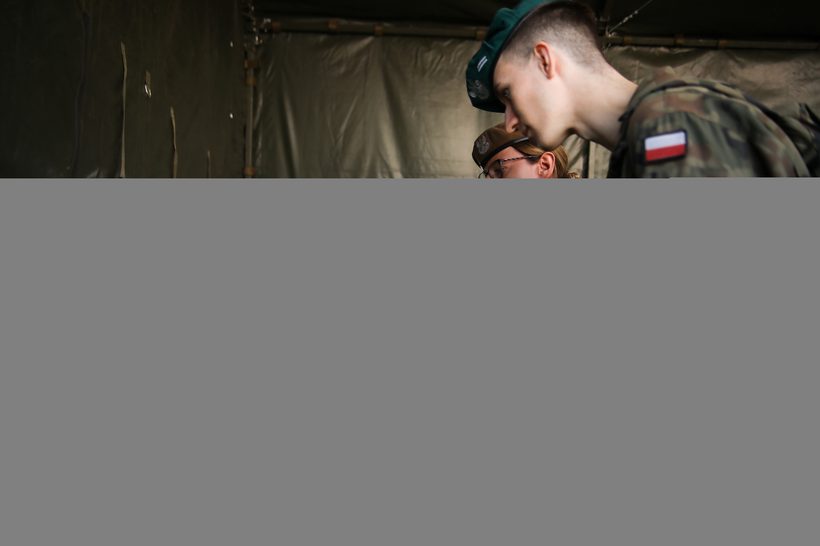
SATIM 是一家波兰合成孔径雷达 (SAR) 图像人工智能分析工具制造商,已获得波兰军方的一份合同,为卫星图像自动分析提供软件。
Featured:
Germany, Poland tap SATIM to analyze military satellite imagery By

WARSAW, Poland — SATIM, a Polish maker of AI-based analysis tools for synthetic aperture radar (SAR) imagery, has obtained a contract from Poland’s Ministry of National Defence to supply software for the automated analysis of satellite imagery.
The company is building on its ongoing cooperation with Germany’s Rheinmetall to support the German SPOCK-1 satellite reconnaissance program.
The solution will support Warsaw’s MikroSAR earth-observation program, SATIM said in a Nov. 12 statement. Advanced by a consortium of Finland’s ICEYE and Wojskowe Zakłady Łączności No 1, a subsidiary of Polish state-run defense group PGZ, the national satellite reconnaissance system is the first component of the military space capabilities Poland aims to develop in the coming years.
“Access to SAR imagery is only the first step. The value comes from extracting useful intelligence quickly, consistently and at scale,” said Jacek Strzelczyk, the CEO of SATIM. “This contract allows us to support Poland’s sovereign reconnaissance capabilities and demonstrate how automated analysis helps analysts make more effective use of radar data.”
SAR satellites can acquire imagery regardless of sunlight conditions and through cloud cover. However, interpreting the collected imagery and properly identifying detected military equipment can be both a challenging and time-consuming process. These difficulties create opportunities for specialized software suppliers such as SATIM, according to company representatives.
“Interest among users increased following the outbreak of the war in Ukraine where cloud cover is frequently an issue. SAR radars can see through clouds, but their imagery is also very difficult to interpret.
Our solution offers a very high level of accuracy, reaching 90–95% for most object classes,” Mateusz Raczyński, a SATIM spokesperson, told Defense News. “We can identify objects across approximately 300 classes, including vessels, aircraft, and vehicles.”
On Nov. 2, SATIM announced that it had reached another milestone with Rheinmetall in their collaboration supporting the SPOCK-1 program.
“The automated analysis pipeline supplied by SATIM to Rheinmetall has now entered operational testing phase, supporting the German Armed Forces’ analysis of synthetic aperture radar (SAR) imagery,” the Polish business said.
Meanwhile, SATIM is working on securing further customers for its services across the world.
“Being a Polish company, we first established cooperation with the German industry that was open to validating our software and after that including it to support the SPOCK-1 program, one of the major ISR programs globally. Now we are also extending our work with Poland,” Raczyński said. “We are also active in other markets.
Our solutions are used in the United States, Japan, Qatar, and the UAE. Next month, we are going to Vietnam to explore this market, as well.”
Notifications
正文由本站服务器抓取保存(已自动过滤广告、推荐位与追踪图片),排版与原站可能不同;版权归原站所有。