美国新报告显示日元救援使用的是欧元,而不是美元。这对比特币很重要
原文:New US report reveals yen rescue used euros, not dollars. That matters for Bitcoin
英文正文:点「译成中文」可整篇机器翻译(免费通道,不花钱),翻好永久缓存、下次秒开。
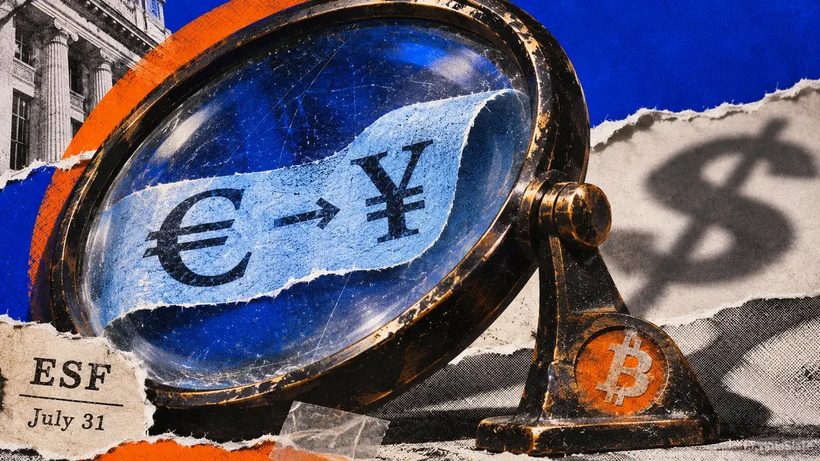
11 月 12 日的报告证实了财政部储备货币交易,使得杠杆日元借贷成为潜在的比特币风险。阅读 CryptoSlate 上的完整故事 了解重要的加密故事以及接下来要观看的内容。将催化剂放入您的收件箱
New US report reveals yen rescue used euros, not dollars. That matters for Bitcoin
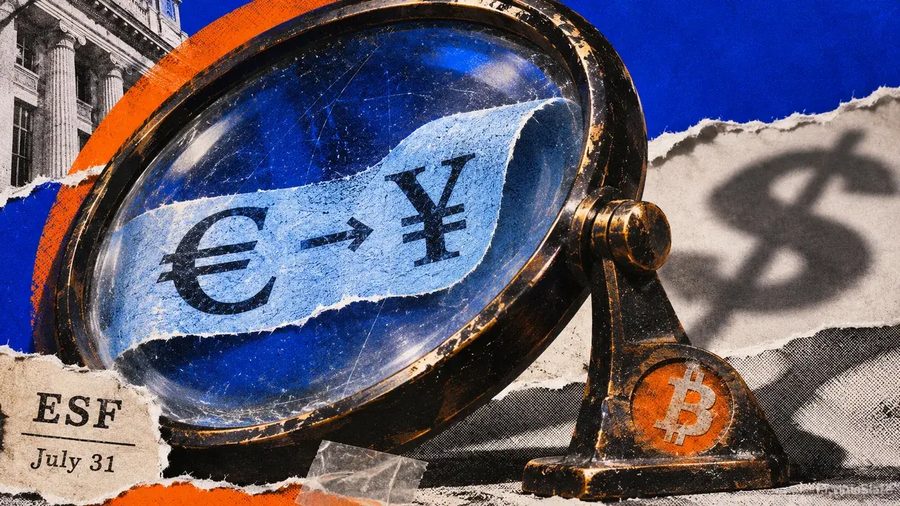
The November 12 report confirms that Treasury used euro reserves to buy yen on July 31, not newly created Fed dollars.
Editor-in-Chief • CryptoSlate2 min read
Quick Take
- 01 The November 12 report confirms Treasury bought yen with ESF euros in July, separating currency support from dollar funding.
- 02 Central-bank dollar swaps outstanding fell from $250 million in June to $207 million in September; BOJ had none at quarter-end.
- 03 Yen appreciation and margin pressure could force leveraged investors to cut risk, but current Bitcoin flows remain unestablished.
The US Treasury financed July’s yen intervention with euros from its reserves, the New York Fed confirmed in a November 12 report . For Bitcoin, the funding currency limits the operation’s significance as a signal of fresh Federal Reserve dollar liquidity.
On July 31, the New York Fed bought 79.4 billion yen in the spot market against euro sales from Treasury’s Exchange Stabilization Fund, or ESF. The aim was to counter what Treasury viewed as disorderly yen moves.
The New York Fed executed the trade as Treasury’s fiscal agent. The Federal Reserve itself did not intervene in foreign-exchange markets during the third quarter. Treasury’s ESF operating framework identifies yen and euros as its foreign-currency assets and describes the New York Fed’s trading role. An exchange of those reserve currencies alone supplies no evidence of new Fed dollars entering Bitcoin markets.
Treasury’s cash plan points to a possible December liquidity window for Bitcoin
A separate mechanism does provide dollar funding abroad: central-bank dollar liquidity swaps . Under those arrangements, the Fed exchanges dollars for a foreign central bank’s currency, with an agreement to reverse the transaction.
The report shows less borrowing outstanding through that facility at quarter-end. Aggregate balances fell from $250 million on June 30 to $207 million on September 30, 2026. The Bank of Japan had none outstanding at September’s end; the remaining balances were with the European Central Bank and Bank of England.
Offshore dollar funding conditions were stable during Q3, the report says, with generally low borrowing premiums in major currency pairs. Those quarter-end stocks do not measure gross lending during the quarter or establish November’s funding conditions.
Yen borrowing still carries risk
Follow the currency behind yen support
The July trade used Treasury euros. A Fed dollar swap is a different funding route.
Compare the funding routes
Compare the funding routesJuly 31 operation, disclosed November 12: the New York Fed traded ESF euros for 79.4 billion yen on Treasury’s behalf.
Facility mechanics only: dollars are exchanged for a foreign central bank’s currency, with a binding reversal.
This euro-funded trade does not establish new Fed dollars for Bitcoin. Leverage remains a possible spillover channel.
July 31 operation and November 12 disclosure are distinct. The swap option explains a facility, not a newly observed transaction. Neither route identifies Bitcoin purchases or current yen-funded deleveraging.
Sources and evidence
Supporting facts
- The New York Fed released its Q3 2026 foreign-exchange operations report on November 12, describing Treasury yen purchases and no Federal Reserve FX intervention during July–September. [2] [1]
- On July 31, acting as Treasury’s fiscal agent, the New York Fed bought 79.4 billion yen in the spot market against ESF euro sales to counter what Treasury viewed as disorderly yen moves. [1]
- Treasury’s July 31 euro-funded yen purchase alone supplies no evidence of a new Federal Reserve dollar injection or fresh dollar funding for Bitcoin. [1] [3]
- The Federal Reserve’s dollar liquidity swaps provide dollars to foreign central banks against their currencies with an agreed reversal, a separate mechanism from Treasury’s outright euro-funded yen purchase. [4] [1]
Method
Source-bound chronology and directional currency-exchange diagrams. Arrows show the currency exchanged, not flow size. Dates are sequence markers, not a scaled timeline. No original calculation or inferred market flow.
Scope
July 31 operation and November 12 disclosure are distinct. The swap option explains a facility, not a newly observed transaction. Neither route identifies Bitcoin purchases or current yen-funded deleveraging.
The more recent BOJ exchange-rate sheet recorded dollar/yen at 159.70–71 at 17:00 JST on November 12. That is a dated market observation, not an announced intervention threshold.
Japan’s services inflation split complicates the BOJ outlook before Friday’s decision
Bitcoin’s potential exposure runs through leverage. A stronger yen makes unhedged yen borrowing more expensive to repay in another currency. If volatility raises margin demands, leveraged investors may need to raise cash or cut positions, spreading pressure beyond the original currency trade.
Research by the Bank for International Settlements found that leveraged equity and currency unwinds amplified August 2024’s market shock, with margin increases and further reductions in leverage worsening volatility. Crypto also responds to wider financial conditions: IMF working-paper authors found that US monetary tightening reduced a broad crypto price factor through investors’ appetite for risk.
These mechanisms explain how a yen-funded unwind could pressure Bitcoin, but the report does not establish current Bitcoin flows or a present unwind. July’s euro-funded yen intervention is not evidence of new Fed dollars entering crypto.
The missing step in the warning that Japan could trigger Bitcoin’s next selloff

The Catalyst
Know what’s moving crypto.
I’m interested in…Thanks for signing up.
Thanks for signing up to The Catalyst. Look out for your first daily email. If you already receive it, you’re all set.
Free newsletters. Unsubscribe anytime.正文由本站服务器抓取保存(已自动过滤广告、推荐位与追踪图片),排版与原站可能不同;版权归原站所有。
