Runway 的开源 Praxis-1 将视频 AI 转变为机器人控制器
原文:Runway's open-source Praxis-1 turns video AI into a robot controller
英文正文:点「译成中文」可整篇机器翻译(免费通道,不花钱),翻好永久缓存、下次秒开。
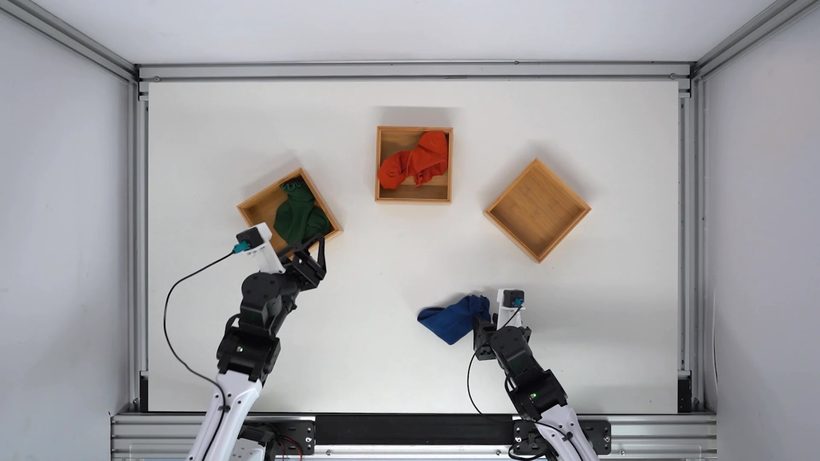
Runway 在 Apache 2.0 许可下发布了具有开放权重和源代码的机器人模型 Praxis-1。该模型利用视频训练中的知识进行机器人控制,并在 Nvidia RoboLab-120 基准测试中在世界动作模型类别中处于领先地位。不过,它还无法自行规划复杂的动作序列。文章 Runway 的开源 Praxis-1 将视频 AI 转变为机器人控制器应用程序
 Runway
Key Points
- Runway has released its robot model Praxis-1 with open weights and source code under the Apache 2.0 license.
- Trained on videos and robot data, the model processes camera images, text instructions, and position data to calculate matching robot movements.
- Praxis-1 can be adapted to new robot systems through additional training, according to Runway. The model does occasionally confuse similar-looking objects, though, and it can't yet reliably plan complex action sequences on its own.
AI company Runway has released its robot model Praxis-1 with open weights and source code. The model uses what it learned from video to control robots and shows promising results in the company's own tests.
Runway has released Praxis-1, its AI model for controlling robots. The company first introduced Praxis-1 in late September but initially gave access only to select partners. Alongside the release, Runway published a detailed research report with new performance tests.
Runway's model weights and source code are available under the Apache 2.0 license, which allows commercial use.
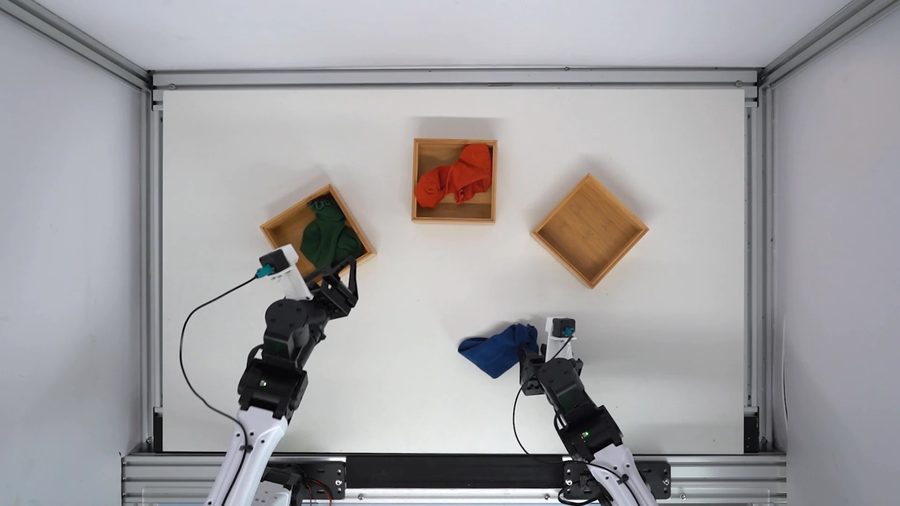
Praxis-1 takes in camera images, text instructions, and information about a robot's position. From those inputs, it predicts how the environment will change and calculates the right robot movements. As new camera frames come in, the model continuously adjusts its control.
Praxis-1 builds on video training to control robots
Praxis-1 builds on a video model that learned how objects move and interact from ordinary footage. Runway then fine-tuned it with videos of human actions and robot data. This approach could reduce the need for expensive robot-specific datasets, which have traditionally been collected just to train these kinds of systems.
Runway is best known for generative video models like Gen-4.5 . With Praxis-1, the company is bringing its video research into robotics. Runway calls Praxis-1 a World Action Model that predicts how a scene will change and derives matching robot movements from those predictions. Since September, robotics companies Standard Bots, Noble Machines, and Ultra have been testing Praxis-1 on different systems, including a humanoid robot, an industrial robot arm, and a dual-arm warehouse robot.
Praxis-1 leads among World Action Models
Praxis-1 still needs some specialized robot data. To adapt it to a Franka robot arm, Runway used about 277 hours of recordings from the public DROID research dataset, according to its research report . Those recordings show robots grasping and moving objects, for example. For a dual-arm robot, the company used between 1,400 and 2,600 hours of training material. Runway had already used DROID data and data from other robot systems during earlier training stages. Whether the approach actually needs less robot data overall than comparable models without general video pretraining is still an open question.
On Nvidia's RoboLab-120 leaderboard , Praxis-1 scores a 46.2 percent success rate. The benchmark tests how reliably robot models can sort, grasp, or stack objects across 120 tasks in simulation. FLUX 3 Action , also built as a World Action Model, scores 42.9 percent under the same test conditions. That puts Praxis-1 at the top of the World Action Model category. In the overall leaderboard, it ranks fifth behind two AI agents and two robot models with different architectures. Runway ran all the tests itself, and the results haven't been independently verified yet.
After fine-tuning on DROID data, Runway tested the model on a real Franka robot arm. Both models had to complete the same ten tasks, like placing a banana on a plate or closing a drawer. With ten attempts per task, Praxis-1 succeeded 88 times, while FLUX 3 Action managed 80.
Runway also tested how well Praxis-1 transfers to a robot type it had never seen before, using data from a mobile robot platform with a gripper arm that Google had previously used to develop RT-1 . Recordings from this robot weren't part of Praxis-1's earlier training. After fine-tuning on about 95 hours of robot data, the model hit an average success rate of 80 percent in simulated tests, according to Runway. The tests covered four types of tasks, including grabbing soda cans, opening and closing drawers, and placing an apple in a drawer. Google's original RT-1 model scored 52.4 percent on the same benchmark.
Praxis-1 still has clear limits
Developers can download Praxis-1 from Hugging Face after signing up and agreeing to the access terms. The code is on GitHub . According to Runway's announcement , pre-adapted versions for different robots are already available alongside the base model. The base model needs additional training before it can work with new robot systems.
The standard model version needs a GPU with 80 GB of memory. A compressed version should fit on an RTX 5090 with 32 GB of VRAM based on Runway's memory estimates, though the actual peak memory usage hasn't been measured yet according to the GitHub docs.
The model sometimes confuses similar-looking objects and struggles with vague instructions, according to Runway's research report. For longer tasks, individual steps need to be spelled out because Praxis-1 can't reliably plan complex action sequences on its own yet.
Runway sees Praxis-1 primarily as a system for fast execution of robot movements. In the future, it could work alongside general-purpose AI models that break complex tasks down into individual steps.
AI News Without the Hype – Curated by Humans
Subscribe now Source: Runway
BETA-TEST | wpDiscuz正文由本站服务器抓取保存(已自动过滤广告、推荐位与追踪图片),排版与原站可能不同;版权归原站所有。