荷兰国防工业计划目标是到 2030 年增长 40%,收入达到 150 亿欧元
原文:Dutch defense-industry plan targets 40% growth, €15 billion revenue by 2030
英文正文:点「译成中文」可整篇机器翻译(免费通道,不花钱),翻好永久缓存、下次秒开。
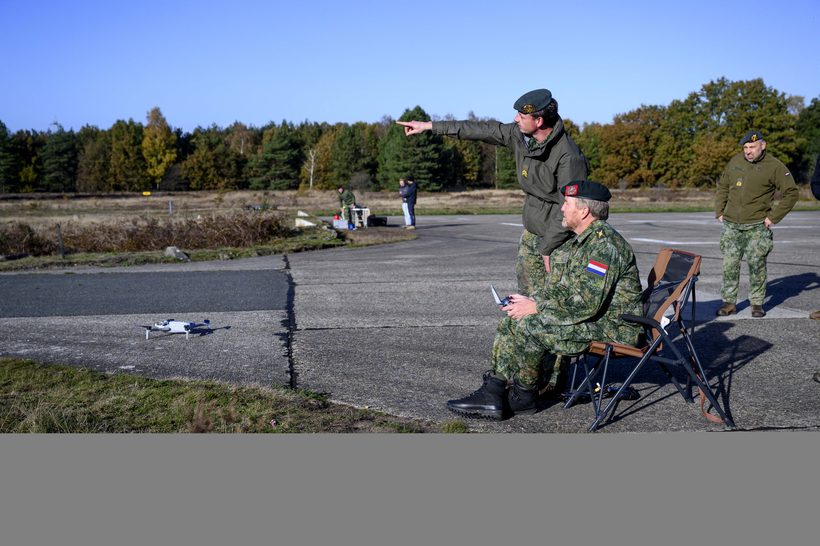
这个拥有 1800 万人口的国家在多个关键国防技术领域都取得了超乎寻常的成绩。
Featured:
Dutch defense-industry plan targets 40% growth, €15 billion revenue by 2030 By

PARIS — The Netherlands presented a defense-industrial plan with a target to grow its defense technological and industrial base by 40% by 2030, with local defense industry revenue reaching around €15 billion ($16.5 billion).
The government has earmarked €1.6 billion for the industry plan , with a focus on integrated air and missile defense, data-driven command and digital resilience, unmanned and autonomous systems; and military sustainment.
The Netherlands is the seventh-biggest defense spender among European NATO countries, ahead of Sweden, based on data from the alliance, yet the country lacks major defense prime comparable to Sweden’s Saab, Germany’s Rheinmetall or the United Kingdom’s BAE Systems.
Still, the nation of 18 million punches above its weight in several defense technology areas. For example, France’s Thales has a large part of its radar business in the Netherlands, while the country is also home to Destinus, a defense technology company which said this week its Ruta cruise missiles were used by Ukraine to target the Kerch Strait bridge.
“Through this national program, the government, together with industry and research institutions, is rolling up its sleeves to ensure that the armed forces get what they need, both now and in a conflict situation,” the government wrote in its letter to parliament .
Warfighting is fundamentally changing, and the impact of technology is “enormous,” the government said, citing space technology, the electromagnetic spectrum, artificial intelligence, cyber, drones and long-range weapons. At the same time, the war in Ukraine has shown the importance of mass, production capability, stocks and the ability to sustain the fight, according to the government.
Strengthening the Dutch defense industry will strengthen the warfighting ability of the Dutch armed forces, according to the government. Spending on the plan will include €600 million for industrial ecosystems and scaling production, €320 million to help pay for international cooperation, and €150 million on make supply chains more resilient.
The Netherlands is counting on the domestic share of Dutch defense-industry revenue to grow faster than the industry’s overall revenue, climbing 50% by 2030 to more than €10 billion. Meanwhile, the target is for exports to grow by about 25%.
The MoD will give greater weight to the origin of products and suppliers in procurement decisions in 2027, and introduce procurement guidelines from the first quarter of 2028 that take into account the origin of raw materials and components, as well a supply-chain transparency, the government said.
The Netherlands is betting on international cooperation in the focus areas, and will actively contribute to leading groups for joint capability development with like-minded partners including Belgium, Germany, France, the U.K. and the Nordic countries, the government said.
“Thanks to their innovative capacity, the Dutch defense industry and research institutions are in a good position to play key roles in global value chains and in this way help reduce risky strategic dependencies for the Netherlands and Europe,” the government wrote in its letter to parliament.
To improve financing access for defense firms, the Ministry of Defence together with Invest-NL will set up a €200 million investment fund for dual-use companies in defense and security.
The MoD will also set up the National Institute for Defence Technology, or NIDT, in 2028, with a budget that will climb to €350 million a year by 2030, the government said. The goal of the new institute will be to accelerate innovation and scaling up.
The government plans to strengthen protections against unwanted takeovers and investments in strategically important Dutch defense companies, as well as against leaks of sensitive technology and expertise, with a target to have additional legal instruments in place from 2028.
About
Rudy Ruitenberg is a Europe correspondent for Defense News. He started his career at Bloomberg News and has experience reporting on technology, commodity markets and politics.
Notifications
正文由本站服务器抓取保存(已自动过滤广告、推荐位与追踪图片),排版与原站可能不同;版权归原站所有。